





On Aug. 12, 2026, a rare total solar eclipse will enchant travelers across such diverse landscapes as sun-kissed Mediterranean beaches, the rolling hills of Spanish wine country and the Arctic wilderness.
During a total solar eclipse, the moon passes directly in front of the sun, blocking its light. Only the sun’s outer atmosphere (the corona) is visible during totality as the temperatures drop and the sky turns dark.
The first total solar eclipse to cross mainland Europe since 1999, its path falls over a remote region of Siberian Russia, eastern Greenland, Iceland’s west coast and northern Spain. (Some have also dubbed it the Ice and Fire Eclipse, nodding to Iceland’s inclusion.)
To experience the total phase of the eclipse, or “totality,” viewers must be within the narrow “path of totality,” an approximately 180-mile-wide path where the total eclipse is visible. The August eclipse has a relatively short duration of totality — the longest, off the western coast of Iceland, is just 2 minutes and 18 seconds — but that doesn’t mean it won’t be spectacular, says NASA eclipse expert and solar physicist Dr. Michael Kirk.
“Every eclipse is unique. The geography of where you are on the planet really influences it and makes it memorable,” says Kirk.
There are many exciting, immersive ways to experience this eclipse: You can hike the Camino de Santiago, visit the Spanish city of Burgos, known for its French Gothic cathedral, stay on the island of Mallorca or go on a polar expedition in Greenland with fjords as the eclipse backdrop.
Eclipse chasers will be treated to a double feature, since the eclipse falls in the middle of the Perseid meteor shower. Kirk says it will even be possible to see some bright meteors streak through the sky during the eclipse.
Best places to see the 2026 total solar eclipse
Cloudy weather can make or break an eclipse-viewing experience, and a reliable forecast will only be available about a week in advance. Experts warn coastal areas can be prone to cloud cover, but that doesn’t mean the beach is a bad idea. Spain’s Balearic Islands, which are within the path of totality, typically get over 300 sunny days a year. Kirk’s best advice is to always have a plan B. “If you are set on seeing this eclipse, then having a car or a way to make yourself mobile to get to where it’s clear in the path of totality is an essential piece,” he says.
Don’t forget to wear specialized eclipse viewing glasses or use an alternative viewing method, such as a pinhole projector. NASA warns that looking directly at the sun without proper protection can severely damage vision.
Reward your inbox with the TPG Daily newsletter
Join over 700,000 readers for breaking news, in-depth guides and exclusive deals from TPG’s experts
If you want to see the August total solar eclipse, we recommend booking a hotel or cruise as soon as possible. Rooms are going fast, and many hotels have minimum-stay requirements.
Northern Spain

The total solar eclipse on Aug. 12 will cross the Iberian Peninsula, including a large swath of Spain. The city of Bilbao, known for modern art and cuisine, is in the path of totality. The walkable northern Spanish cities of Burgos and Leon will also make excellent home bases for eclipse viewing. The celebrated wine region of La Rioja, known for its deep red wines aged in oak barrels, will experience totality as well. The eclipse will miss Madrid and Barcelona; still, travelers can drive from those cities to get into the path of totality. Kirk recommends finding a low-horizon view looking west in Spain, because the sun will be setting as it is eclipsing. “You want to have a clear view of the sunset as much as possible,” says Kirk.
Here are some hotels in Northern Spain and La Rioja that still have availability:
- Castilla Termal Brihuega, from $446 or 24,250 World of Hyatt points per night
- DoubleTree by Hilton A Coruna, from $1,194 or 130,000 Hilton Honors points per night
- Hotel Ercilla de Bilbao, Autograph Collection, from $1,921 or 70,000 Marriott Bonvoy points per night
- Hotel Marqués de Riscal, a Luxury Collection Hotel, Elciego, from $1,529 per night (Marriott Bonvoy redemptions are no longer available)
- Palacio Arriluce Hotel, from $1,112 per night via Amex Fine Hotels + Resorts
Though most guided solar eclipse tours of Spain are already sold out, the astrotourism outfitter Astro Trails still has a few remaining spaces on its 8-day Spain’s Atlantic Coast eclipse tour, with stops in Bilbao, Gijon, Santiago de Compostela and the fishing village of Puerto de Vega.
You can also join the waitlist for outfitter Wilderness Travel’s 5-day-long Total Solar Eclipse of 2026: Northern Spain itinerary, Smithsonian Journeys’ 8-day-long Solar Eclipse Over Spain: Basque Country to Leon itinerary or Sky & Telescope’s 11-day-long Spanish Total Eclipse Adventure 2026 itinerary.
Valencia, Spain
The largest Spanish city in the path of totality, Valencia has impressive Gothic architecture, an ornate central market and beautiful scenery. The port city, which will experience about a minute of totality, sits where the Turia River meets the Mediterranean Sea, and it has several sandy beaches and multiple parks. The key to viewing the eclipse will be finding a west-facing area with a relatively unobstructed view. Valencia’s best options include Turia Garden, a green space in a former riverbed, the city’s marina and Albufera Natural Park, which has a freshwater lake, dunes and wetlands that hundreds of birds visit throughout the year. A hotel with a high rooftop should also offer clear views of the eclipse.

Here are some hotels to book with availability in Valencia:
Balearic Islands, Spain
Mallorca, Menorca and Ibiza are all within the path of totality. Since the sun will be so low in the sky during totality, the panoramic turquoise sea views will be memorable and unobstructed. The eclipse’s centerline cuts right across Mallorca, just south of the city of Palma. This historic city will be one of the best places to see the eclipse, with about 1 minute and 36 seconds of totality starting at about 8:31 p.m. CEST.
Related: Where to go in 2026: The 17 best places to travel
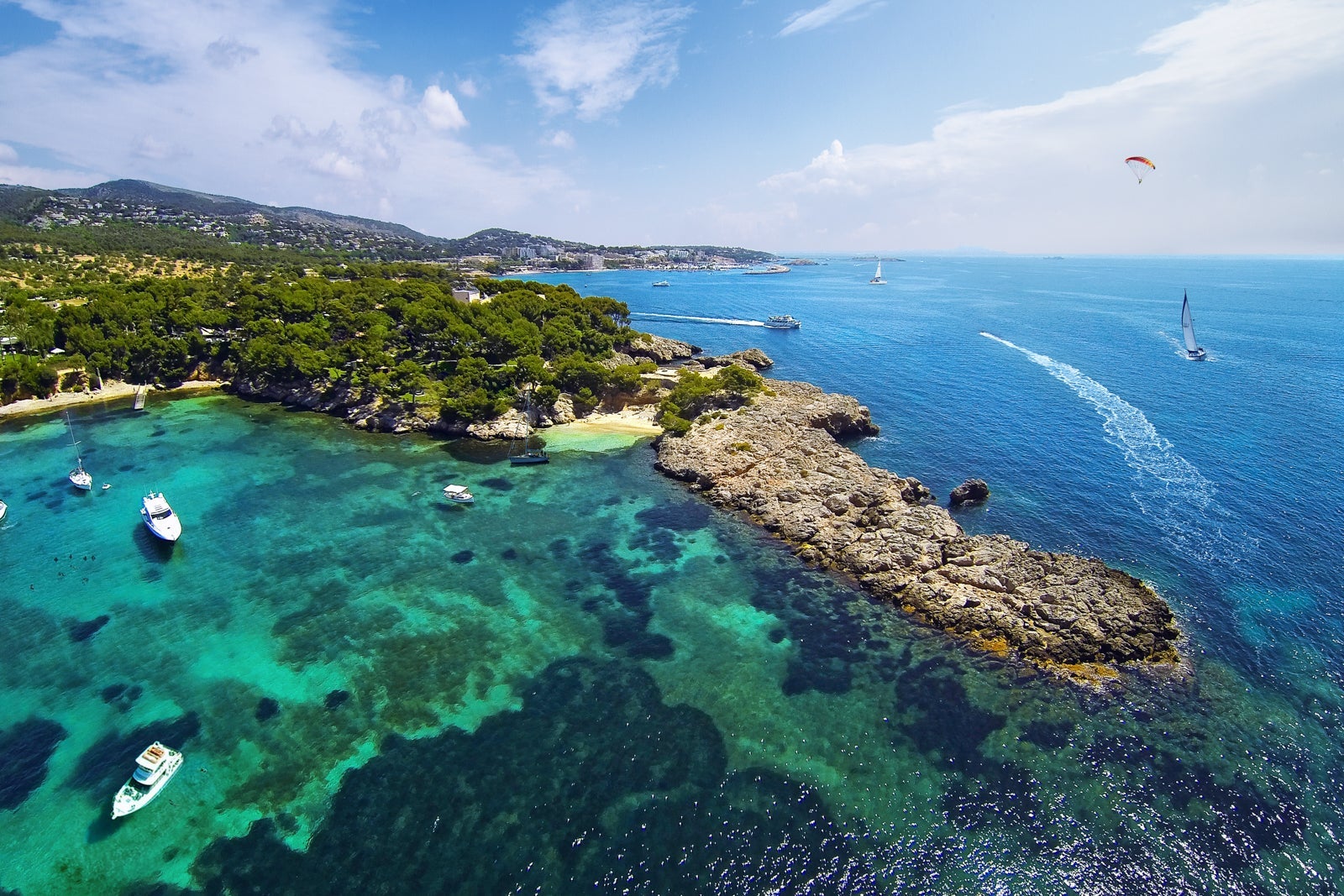
Here are some hotels with eclipse availability.
- 7Pines Resort Ibiza, Destination by Hyatt, from $783 or 35,000 World of Hyatt points per night
- Cala San Miguel Ibiza Resort, Curio Collection by Hilton, from $525 or 90,000 Hilton Honors points per night
- Hacienda Son Antem Golf Resort, Autograph Collection, from $693 or 70,000 Marriott Bonvoy points per night
- Hilton Mallorca Galatzo, from $660 or 317,000 Hilton Honors points per night
- Hotel Riomar Ibiza, a Tribute Portfolio Hotel, from $572 or 79,000 Marriott Bonvoy points per night
- Mandarin Oriental Punta Negra, Mallorca, from $3,157 per night via Amex Fine Hotels + Resorts
- Sheraton Mallorca Arabella Golf Hotel, from $430 or 67,000 Marriott Bonvoy points per night
- Six Senses Ibiza, from $2,071 or 386,000 IHG One Rewards points per night
- The Standard Ibiza (adults only), from $660 or 29,000 World of Hyatt points per night
- W Ibiza, from $646 or 97,000 Marriott Bonvoy points per night
Western Iceland

The August eclipse’s path of totality will cross western Iceland, including the Westfjords, the Snaefellsnes Peninsula, and the Reykjanes Peninsula. Reykjavik will experience about a minute of totality in the afternoon.
Although Iceland is not known for sunny weather, August offers the best chance for clear skies, and the country’s low light pollution and stunning scenery will enhance the viewing experience.
Hotels and guesthouses in Iceland are filling quickly. Here are some hotels that still have availability:
*Hilton is releasing eclipse reservations at its Reykjavik properties on March 5. A three-night minimum will be required. Prices are yet to be announced.
Because the eclipse’s centerline is off Iceland’s west coast, one of the best ways to see it is from the sea. Azamara’s 18-night Solar Eclipse Cruise: Iceland, Greenland and Quebec departs from Reykjavik, Iceland, Aug. 8 and includes an at-sea eclipse viewing day on Aug. 12 off the west coast of Iceland before heading to Greenland.
Cunard’s famed Queen Mary 2 will visit Reykjavik for an overnight call on Aug. 12 as part of the 14-night Norway and Iceland (M618) adventure that includes sailing through the tranquil fjords of Norway, before crossing the North Sea to Iceland.
Eastern Greenland
The eclipse will sweep over the inhospitable eastern side of Greenland, where only a few remote military and research outposts lie within the path. Almost all of Greenland’s population lives on the island’s western side, so the best way to see the total solar eclipse in Greenland is to instead go on an expedition-style cruise, with several scheduled to view the eclipse from the country’s otherworldly Scoresby Sound. The world’s longest fjord system is an Arctic wilderness of towering cliffs, icebergs and glaciers.

Departing from Reykjavik on Aug. 6 aboard the 199-passenger Ultramarine, Quark Expeditions’ 12-night Iceland to Greenland: A Total Solar Eclipse sailing visits Iceland’s Westfjords before crossing the Denmark Strait to Northeast Greenland National Park, the world’s largest national park. For eclipse day, the ship will position itself in King Oscar Fjord, where totality will last 2 minutes and 17.2 seconds. Call to enquire about remaining availability.
New Scientist Discovery Tours’ Total Solar Eclipse 2026: Iceland to Greenland polar cruise, with one night in Reykjavik and 11 nights aboard the Sylvia Earle polar expedition vessel, still also has some availability. There will be daily Zodiac boat safaris, guided wilderness hikes, and viewing the main event from a deep inlet in the Scoresby Sund, where there’s less chance of clouds than at sea.
Related reading:
Source link


Add Comment