





The Rotten Tomatoes score of BoJack Horseman should be enough to entice viewers who haven’t seen the series, but its status as a rare sitcom with no bad episodes is what really makes the dramedy stand out. Debuting in 2014, BoJack Horseman was an early hit for Netflix before the arrival of Stranger Things, The Queen’s Gambit, or Squid Game.
The animated dramedy follows the misadventures of its titular character, a misanthropic sitcom star who struggles to accept that his glory days are behind him. Voiced by Will Arnett, BoJack is a tragic, repugnant, but strangely hilarious figure. The best episodes of BoJack Horseman humanize the fading star, but don’t excuse the consequences of his misdeeds.
And his misdeeds do come to define the series, particularly in its later seasons. A show that fundamentally changes as it continues, BoJack Horseman starts out as a slice-of-life comedy that is propelled primarily by silly show business satire and occasional moments of unexpected poignancy. In season 1, it is the inspired puns that will keep viewers coming back for more.
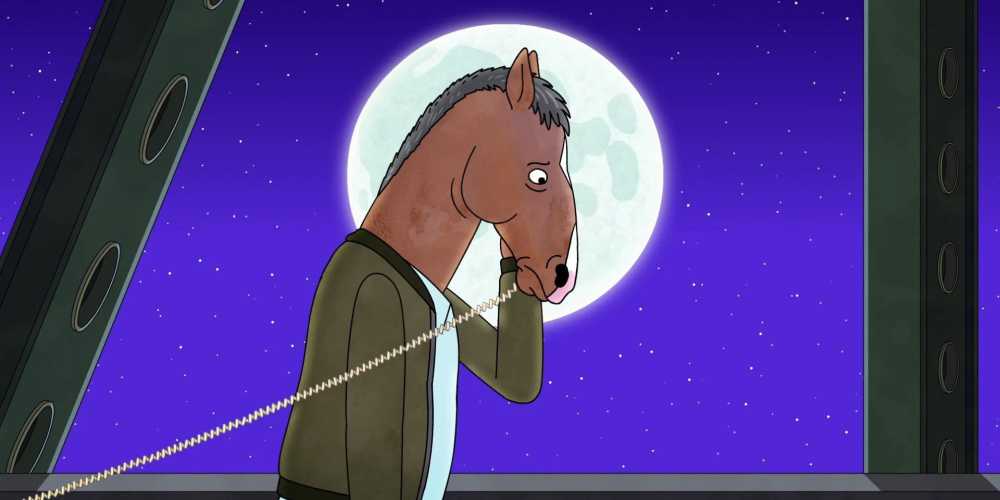
However, as early as season 2’s ending, BoJack Horseman begins to morph into something entirely darker and more ambitious. The show’s own view of its title character gets dimmer with each outing, as the people impacted by his actions come to the fore and the show’s sympathy for him wanes.
By the time BoJack Horseman’s ending rolls around, viewers are watching a show that is entirely different from season 1’s spiky but flippant cartoon comedy. Although the antics of BoJack’s slacker roommate, Todd, ensure that the series always maintains a rich vein of absurdist humor, the title character’s own journey is a dark, thorny, and morally complex one.
While shows like Rick and Morty, South Park, and Family Guy often use dark humor for shock value, BoJack Horseman touches on topics like sexual harassment, suicidal ideation, drug abuse, depression, and mental illness in more depth. The show’s depiction of its deeply flawed main character arguably outdoes even the likes of The Sopranos and Mad Men.
What makes BoJack Horseman a stronger series than Rick and Morty, for example, is its refusal to laugh off the mistakes of its main character. As the series continues, Bojack’s long-forgotten failures come back to haunt him, and viewers learn that the far-reaching implications of his misadventures are more than a punchline.
BoJack Horseman’s Blend of Comedy and Drama Gets Better Each Season

BoJack Horseman starts funny, meaning season 1 is well worth watching for its many laughs alone. To be clear, the series maintains its comedic edge throughout, and Bojack’s one-sided rivalry with his relentlessly cheery nemesis Mr. Peanutbutter is hilarious even during the show’s darkest hours. However, it is the show’s naturally emergent drama that makes later seasons sing.
Episodes like season 4, episode 11, “Time’s Arrow,” or season 5, episode 6, “Free Churro,” prove that some of BoJack Horseman’s best moments come from the depths of dramatic darkness. One of the show’s strongest hours, the penultimate outing “The View From Halfway Down,” is both its darkest episode and arguably its best.
Fortunately, since seasons 1 and 2 don’t lean too heavily into drama, these early outings serve up some of the show’s funniest episodes. It is during these early days that viewers also get invested in the stories of Diane Nguyen, the frustrated author who is hired to chronicle Bojack’s comeback, and Princess Carolyn, his eternally overworked agent.
As the extent and severity of Bojack’s issues gradually come to light in later seasons, the subplots of Princess Carolyn, Diane, and Todd become lighter, more hopeful islands in the show’s murky, dramatic sea. Bojack isn’t irredeemable, but by season 5, it is clear that he won’t emerge from the show’s story as just a troubled antihero.
Netflix’s Comedy Output Has Still Never Outdone BoJack Horseman

According to series creator Raphael Bob-Waksberg, the story of BoJack Horseman was fundamentally altered by an upsetting real-life realization. After the #MeToo movement outed the serial predator Harvey Weinstein, Waksberg learned that the Miramax mogul was reportedly a huge fan of the series.
Realizing that the show hadn’t adequately dealt with the human cost of Bojack’s actions, the writers reworked the ending of Bojack’s character arc to address this. The result was six seasons of BoJack Horseman that built a surprisingly likable protagonist out of an abusive character, then deconstructed this character without turning him into a one-dimensional villain.
By centering season 6 on the ways that Bojack’s trauma led him to traumatize others, the series offered a nuanced and empathetic portrayal of abuse that still stopped short of excusing its main character. This was impressive enough on its own, but the series also managed to remain hilarious despite delving into these dark themes.
In the process, BoJack Horseman became Netflix’s strongest comedy offering to date, and the show remains the jewel in the streaming service’s sitcom crown. Netflix has struggled with sitcoms more than the streaming giant might like to admit, but BoJack Horseman proves that backing a truly great original idea through to the end pays off.

- Release Date
-
2014 – 2020-00-00
- Network
-
Netflix
- Showrunner
-
Raphael Bob-Waksberg



Source link


.png?w=300&resize=300,200&ssl=1 "Daft Punk Share New Video for “Human After All”")


.png?w=74&resize=74,55&ssl=1 "Daft Punk Share New Video for “Human After All”")


Add Comment