





After only two games in the last eight years, God of War is already at another fascinating juncture. The series has already undergone one massive evolution, as fans well know. Following the cliffhanger ending of God of War 3, it was unprecedented that Kratos would move to the Norse mythology’s realm of Midgard after essentially leaving the world of Greek mythology in ruins.
Warning: The following article includes spoilers for God of War Ragnarok.Most of God of War’s lore and history was established in the Greek mythology era, which comprised seven games in total. Meanwhile, God of War’s Norse saga came with a stunning snow-blanketed setting and a monumental gameplay overhaul. Like Kratos at the beginning of this new era, it seems as if the series is content to forget about its past and ensure a continued link to Norse mythology rather than Greek.
God Of War Ragnarök Was A Fork In The Road

God of War Ragnarök’s story plays quite a few mind games, such as implying that Kratos could die by the end of the game, and it concludes with Kratos and his son, Atreus, carving their own trails. Atreus is beginning a pilgrimage to an undetermined location, while Kratos is supposedly staying in Norse mythology’s nine realms and becoming a benevolent god.
This is all well and good, but it doesn’t correspond to what was stated about the franchise, specifically that the book had closed on God of War’s Norse saga with God of War Ragnarök. Of course, unless Kratos has been quietly shelved as a character, the Norse saga can’t possibly be finished with God of War’s mascot protagonist still inhabiting it, even if he isn’t playable in every subsequent God of War game.
Either way, Atreus is expected to lead a new God of War game in the future, whether the game is drastically retitled to reflect its new main protagonist or not. This fork in the road may have purposefully led to the potential for more Kratos-led Norse-era games alongside Atreus-led games in whatever mythology he journeys to, but they’d both be reinforced by the Greek era and the character development it helped to supply for Kratos, who was a rampaging monster before retiring the Blades of Chaos and wielding God of War’s Leviathan Axe.
Suddenly, this fork is now more of a lone, singular road. Perhaps influenced by Amazon Prime Video’s God of War series, or vice versa, it would make a lot of sense for Santa Monica to continue to milk every ounce it can out of the Norse saga as the show is adapting it.
Afterward, it will be Santa Monica’s responsibility to guide the show into whatever mythologies and eras it pursues, and the Greek saga is already at a considerable disadvantage. Ironically, while the games have harped on the Greek era for long enough, the upcoming show has every right to do so again.
Amazon’s God Of War Show Is Problematic

This live-action God of War show presents a huge problem. The franchise may have made its peace with the Greek saga via God of War Ragnarök’s Valhalla DLC, wherein Kratos successfully and poignantly reconciled with his past, but the show won’t have any history to reminisce about.
God of War’s casting announcements for Sif, Thor, and Odin have unambiguously declared that not only will the TV show be situated in the Norse saga, but it may also skip ahead to the events of God of War Ragnarök. The glaring issue here, then, is that it could give little attention to the Greek saga — or worse, it could reduce the Greek saga to intermittent flashback sequences that obliterate any chance of decent pacing in a string of episodes.
It’s impossible for the Amazon adaptation to avoid touching on Kratos’ Greek mythology history at all unless it completely rewrites the character’s backstory, particularly as Kratos’ backstory explicitly explains a lot of the tension in his relationship with his son and why he is so emotionally guarded. It would be far more commendable if the show were committed to telling Kratos’ whole story from the beginning rather than jumping ahead to where the story has halted.
God Of War Is Stuck In Its Norse Era

The only meaningful way that the Greek saga could be reprised today is conceivably via remasters or remakes. Still, while it deserves to be buried and moved on from in the games’ lore, the TV show would be remiss not to make it a massive influence on the story.
It’s hard to picture the show spending any meaningful time on the Greek era of Kratos’ life when so many God of War Ragnarök characters have been cast. Non-gamer audiences watching it will probably be learning why Kratos is the way he is at the same time as Atreus for a late-season reveal.
This could be spectacular if executed well from Atreus’ perspective. All the same, it would be alarming for such a colossal chunk of God of War’s legacy and the source material history to be omitted or excluded for the sake of a reveal that won’t possibly be as satisfying to watch in a flashback as it was to experience in more than half a dozen games.
For now, God of War may want its brand synergy to remain connected to the Norse saga because of its popularity and the apparent setting of the new show. Many new God of War fans arefamiliar with these Norse games, and some may have only learned about Kratos’ past in Ancient Greece by playing God of War (2018).
Emulating this same revelatory experience, brand-new audiences who’ve never seen or played one of the previous games will probably be surprised to hear that the God of War franchise has ties to different mythologies. Plus, it would admittedly be an astonishing reveal to make at the end of God of War’s first season that Ryan Hurst’s Kratos had killed Greek gods, including none other than Zeus (Kratos’ father), Poseidon, Hades, Ares, Helios, Hermes, Hera, and Athena.
It’s ultimately unfortunate that we won’t have a fully fleshed-out season of TV to depict the Greek era’s events and Kratos’ unbridled bloodlust. The Amazon God of War show has god-like shoes to fill now, and how it represents the Greek saga will be just as important as how it represents the Norse saga.
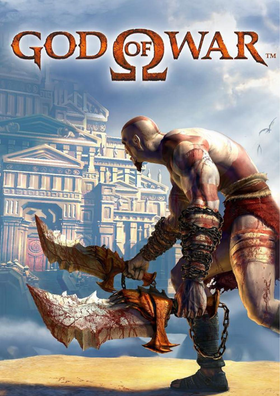
- Created by
-
David Jaffe
- Video Game(s)
-
God of War (2005), God of War II, God of War: Betrayal, God of War: Chains of Olympus, God of War III, God of War: Ghost of Sparta, God of War: Origins Collection, God of War: Ascension, God of War III: Remastered, God of War: A Call from the Wilds, God of War (2018), God of War Ragnarok
- Character(s)
-
Kratos, Atreus, Athena (God of War), Ares (God of War), Zeus (God of War), Baldur, Thor (God of War), Freya (God of War)
Source link


Add Comment