





A new judge will be assigned to handle Alabama star Charles Bediako’s eligibility case after the motion to recuse him was granted, ESPN reported on Tuesday, citing court documents. The NCAA filed the motion to recuse James H. Roberts Jr., the Tuscaloosa judge who issued the original temporary restraining order that allowed Bediako to return to the Crimson Tide after he declared for the NBA Draft in 2023 before playing in the G League.
Roberts and his wife, Mary Turner Roberts, have been acknowledged by the Crimson Tide Foundation’s website as donors to the university with contributions of between $100,000 and $249,999
Despite last playing for Alabama three years ago, Bediako has been a contributor in his first two games after returning.
Bediako played 25 minutes and scored 13 points for the Crimson Tide in their loss to Tennessee last weekend in his first game action for the program since 2023. Bediako played on Tuesday against Missouri and finished with 14 points, six rebounds and a steal in 18 minutes during a 90-64 win for the No. 23 CVrimson Tide.
Alabama has a matchup against reigning national champion No. 19 Florida on Sunday.
The NCAA’s motion requesting Roberts’ recusal noted it is not alleging “an actual bias, partiality, or prejudice.” However, the NCAA’s argument centered on what it contends is an “an impermissible appearance of impropriety because of the intense media scrutiny and public speculation surrounding the Court’s relationship with the University of Alabama and its athletics programs and student-athletes.”
Poll position questioned
Alabama dropped six spots in the AP Top 25 poll to No. 23 after falling to Tennessee in Bediako’s debut. The presence of Bediako on the floor was an influential factor in at least one voter’s slotting of the Crimson Tide. Connor Earegood, who covers Michigan State for the Detroit News, revealed that he did not include Alabama on his ballot because of the Bediako situation.
“I will not rank a team that has to circumvent the rules through a court order just to win (and still lost),” Earegood wrote on X. “To me, that’s a team admitting its own weakness.
Bediako doesn’t miss a beat in return
Two and a half years after last suiting up for Bama, Bediako looked great in his return, adding a dynamic lob threat to the Crimson Tide’s frontcourt.
He finished 5-of-6 shooting from the floor — with four dunks — and added added three rebounds, two blocks and two steals. It was exactly the type of performance that may make the heartache of doing battle with the NCAA worth it for coach Nate Oats, who thrust his program into the national spotlight in recent days by pushing to get Bediako eligible during the middle of the season.
Were Alabama fans cheering Charles Bediako — or the erosion of the NCAA?
John Talty
Bediako’s return to college basketball — aided by a temporary restraining order issued by a local judge — after his entry into the 2023 NBA Draft has whipped college basketball into a frenzy. The case is only the latest example of how eligibility standards in college basketball are cratering as the NCAA’s rules continue to face legal challenges.
He last played for Alabama in the 2022-23 season as a sophomore before remaining in the NBA Draft pool beyond the NCAA’s well-established and clearly communicated draft withdrawal deadline. That deadline has long served as a line in the sand for players weighing their futures.
Prior to the Bediako fiasco, the precedent maintained by the NCAA was this: if you withdraw before the NBA Draft deadline, you can preserve your collegiate eligibility. If you don’t withdraw and choose to remain in the NBA Draft, you are forfeiting your future collegiate eligibility. There was never any ambiguity over that until Bediako found a friendly judge who cleared the path for his return.
Norlander’s Court Report: Charles Bediako’s case could crater college hoops; inside Virginia’s rapid rise
Matt Norlander
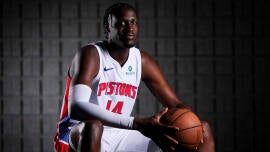
Throw in the fact that Bediako signed multiple NBA contracts and has been away from college basketball for nearly three years and you get a messy situation that has stoked the ire of coaches around the country.
The precedent now being established by the Bediako case could permanently change the enforceability of the draft withdrawal deadline, further eroding the NCAA’s ability to govern college basketball. It’s also just the latest domino to fall in a saga that has seen the makeup of college basketball rosters continue to change and skew in a more professional direction.
While some have likened the case to that of Baylor center James Nnaji, who joined the Bears earlier this season after he was drafted No. 31 overall in the 2023 NBA Draft, there are some key differences.
A pro career hasn’t panned out
Bediako went undrafted in 2023 and has not played in an NBA game, but he did sign a two-way contract with the Spurs ahead of the 2023-24 season. He’s also signed NBA Exhibit 10 deals. Both forms of contracts make him ineligible for college basketball, according to NCAA standards. This is also one key area in which Bediako’s case differs from others who have played in the G League before returning to college basketball: Bediako is the first to have been under contract with an NBA organization.
Here is an excerpt from the NCAA’s statement made by senior vice president of basketball Dan Gavitt:
“Mr. Bediako signed three NBA contracts after competing in college for two seasons. The NCAA has not and will not grant eligibility to any prospective or returning student-athletes who have signed an NBA contract. Eligibility rules ensure high school students get a shot at earning scholarships, and we will continue to consistently apply and defend these rules.”
Getty Images
The case for returning to college
A key point in Bediako’s argument for eligibility is that he is within the NCAA’s five-year window for eligibility. The clock started when he enrolled at Alabama as a freshman in the 2021-22 season, and the 2025-26 season marks Year 5 on his clock. Since he’s within his five-year window and has yet to play in an NBA game, Bediako’s representation argues he should be able to play.
“The NCAA’s arbitrary and inconsistent enforcement of its eligibility standards is inflicting immediate and irreparable harm upon him,” said Bediako’s lawyer, Darren Heitner, in a statement. “This harm is particularly egregious given the NCAA’s recent decisions granting eligibility to athletes with far more extensive professional experience, revealing a pattern of selective and inequitable application of its own rules.”
Differences between Bediako and Nnaji cases
The case involving Baylor center James Nnaji differs from the Bediako case because, although Nnaji was drafted in 2023 (the same year Bediako went undrafted), Nnaji never signed an NBA contract. Nnaji was also cleared by the NCAA to play for Baylor, whereas Bediako has not been cleared by the NCAA.
Nnaji also never appeared in a college basketball game and thus was never subject to the NCAA’s NBA Draft withdrawal deadline. Bediako was subject to that deadline in 2023.
A local judge makes decision
The temporary restraining order granted by judge James Roberts Jr., a Tuscaloosa County Circuit judge, allowed Bediako to play on Saturday. Roberts’ decision drew criticism after it was revealed he is listed as a donor to the University of Alabama’s athletic department. On Jan. 26, the NCAA filed a motion requesting Roberts’ recusal to avoid the appearance of impropriety.
What Oats said about his roster addition
Alabama needs help on the interior, and Bediako profiles as a strong rim protector after leading the Crimson Tide in blocks with 1.8 per game in the 2022-23 season. Though Bediako is averaging just 4.9 points, 5.4 rebounds and 0.6 blocks in 15.1 minutes per game for the Motor City Cruise, he size, length and track record of collegiate production could benefit the Crimson Tide. Those attributes were all on display against Tennessee.
“He was here not that long ago, and when he was here, he was an elite rim protector, very good post defender, rebounder, very good lob target,” Alabama coach Nate Oats said. “And I think his game’s continued to develop, and we’ll try to use some of the stuff he’s developed. But right now, we’re just trying to get him used to playing with the players we have.”
What other coaches are saying about Bediako
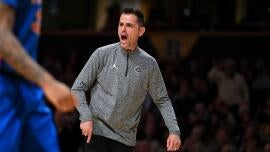
Florida coach Todd Golden said “I don’t agree with it, and I don’t think he should be playing.” He also added that he doesn’t fault Oats for taking a step that could help his team win games.
“We are going to beat them anyway,” Golden said. “If he plays, we’ll beat them anyways.”
Florida’s Todd Golden sounds off on Charles Bediako’s potential return to Alabama: ‘We’ll beat them anyway’
Cody Nagel
Kentucky coach Mark Pope suggested the NCAA Tournament selection committee should not consider results that occurred when a team played someone who is not eligible under NCAA rules.
“The one stop gap that is kind of spreading right now, that maybe has some legs, is that the NCAA does get to decide who gets to go to the NCAA Tournament,” Pope said. “They get to decide that. They have that power.
“They’ve been very, very clear about the rules they’re going to try to enforce,” Pope added. “They might lose in court, but they still get to decide what games count towards the NCAA Tournament.”


Add Comment