





In 1985, Stephen King called Clive Barker the “future of horror,” but 40 years on, how accurate did this claim prove to be? Stephen King’s books were an inescapable part of pop culture by the mid-1980s, and while he may not have earned critical respectability (yet), the author was undeniably the king of horror during this time.
Stephen King movies were also arriving at an alarming rate, with producers eager to snap up anything he wrote. King himself was a vocal fan of the genre, often giving shout outs to authors and filmmakers whose work he loved. In fact, Stephen King’s recommendations continue to this day, as he regularly suggests movies, shows and books on social media.
Stephen King Labeled Clive Barker “The Future Of Horror”

In 2025 alone, he shouted out Zach Cregger’s Weapons, Horror-Western Killing Faith, and the TV show From. Rewinding back to the 1980s, King had several horror authors he was competing against, including Dean Koontz, James Herbert and, eventually, Clive Barker.
Barker broke onto the scene with his Books of Blood anthology, which comprised six volumes of terrifying and rather gory short stories. The newbie author received a huge boost when King gave the Books of Blood a quote, stating, “I have seen the future of horror and his name is Clive Barker.”
Pretty much every novel and movie Barker was part of from that point on came attached with King’s quote – which is quite understandable. King was effusive in his praise of Barker’s writing, praising it as so original and shattering that it made other name horror writers “… look like we’ve been asleep for the last ten years.”
Clive Barker Had An Incredible Run During The 1980s And 1990s

Barker has claimed King’s generous quote changed his career forever, and he went on to an incredible run of work. He penned bestsellers like The Damnation Game, The Great and Secret Show and The Thief of Always. He also created two horror icons when he moved behind the camera.
In 1987, Barker adapted his novella The Hellbound Heart into horror classic Hellraiser, a Faustian love story that also introduced the world to the demon, Pinhead (Doug Bradley). 1992 also saw Barker produce Candyman, based on his Books of Blood short story, The Forbidden.
Barker’s output was especially prolific during the 1990s, where he directed two movies, produced several others, penned many books and comics; he even had his own imprint with Marvel Comics. Moving into the 2000s, he also tried his hand at video games with Undying and Clive Barker’s Jericho.
Unfortunately, the author’s health took a major turn for the worse in 2012, when a visit to the dentist led to him contracting toxic shock syndrome. This put Barker in a coma and almost killed him, and his recoverly would slow his creative output in the years that followed.
Barker’s Work Has Influenced Many Authors And Filmmakers

Barker’s writing style could be extremely graphic, but there is also an undeniable warmth and humanity to his work too. Much of his fiction takes the side of the so-called monsters, with Cabal (later adapted as 1990’s Nightbreed ) exploring an underground world of creatures being hunted down by evil humans.
His work has been cited as an influence by Guillermo del Toro, with monsters as heroes being seen in nearly all the director’s work, from Hellboy to 2025’s Frankenstein. Other filmmakers who cited Barker’s work as an inspiration include Brannon Braga, Scott Derrickson and Mike Flanagan.
Scott Derrickson made his directorial debut with the 2000 sequel Hellraiser: Inferno.
Nic Cage cult favorite Mandy also took clear inspiration from Barker’s work, particularly Hellraiser. As for other authors, his novels have been shouted by the likes of China Miéville, Poppy Z. Brite and Joe R. Lansdale (Bubba Ho-Tep).
Stephen King’s Clive Barker Prediction Was Largely Accurate

Clive Barker may have never reached the same level of cultural acceptance as Stephen King, but that doesn’t mean the latter’s “future of horror” prediction wasn’t spot on. Barker not only became a major horror writer and filmmaker, but his influence on the genre are clear to see.
Barker’s writing was ultimately always going to be a little too dark, extreme and strange to achieve full acceptance with mainstream audiences. That was never his intent, though, so instead of pumping out Hellraiser sequels and getting rich, he focused on artistic pursuits that excited him instead.
From paintings to comics to movies and video games, Barker was never afraid to take risks and try out new challenges. 40 years on from King’s quote, the horror landscape may not resemble Barker’s vision, but it’s also a richer, more complex genre thanks to creators like him.
He pushed the envelope in terms of bloodshed and sexuality in his work and encouraged other authors and directors to be bolder. Guillermo del Toro feels like his biggest student, but his influence can also be found in recent TV shows and films like American Horror Story, The Substance, Stranger Things and so on.
Barker is still writing and creating, so his future work could still continue to thrill, repulse and inspire. Again, Clive Barker didn’t become the name that Stephen King did, but the author was absolutely right about Barker becoming an important figure in the horror genre.
-

- Birthdate
-
October 5, 1952
- Birthplace
-
Liverpool, England, UK
- Notable Projects
-
Hellraiser, Candyman
-
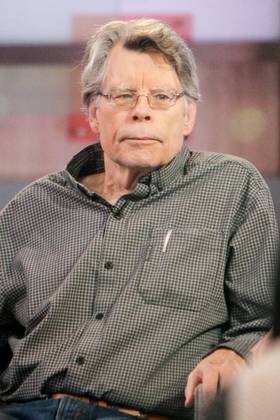
- Birthdate
-
September 21, 1947
- Birthplace
-
Portland, Maine, USA
- Height
-
6 feet 4 inches
- Notable Projects
-
The Shawshank Redemption, The Shining, It, The Stand, Misery, The Dark Tower, Mr. Mercedes, Carrie
- Professions
-
Author, Screenwriter, Producer, Director, Actor
Discover the latest news and filmography for Stephen King, known for The Dark Tower series, The Stand, IT, The Shining, Carrie, Cujo, Misery, the Bill Hodges trilogy, and more.
Source link


Add Comment